The advisors · Motives
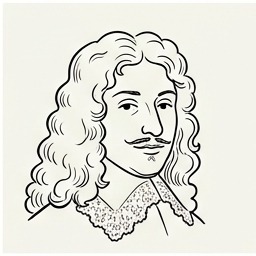
La Rochefoucauld
1613–1680 · French moralist and master of the maxim
François de La Rochefoucauld was a duke who spent his youth in plots and civil wars, lost everything — position, fortune, very nearly his eyesight, to a musket blast — and retired to the Paris salons to distill what he had learned about human motives into single sentences. The Maxims made polite society very uncomfortable, because they were about polite society.
The thought
La Rochefoucauld's single instrument is amour-propre — self-love — which he finds operating under every virtue. Our virtues, runs his most famous maxim, are most often only vices in disguise: generosity that wants an audience, honesty that wants to wound, modesty fishing for a second compliment. The disguise is usually invisible to the wearer.
This is not misanthropy; it is precision. He does not claim people are evil — only that the stated motive is rarely the operating one, and that self-interest speaks all languages and plays all roles, including the role of disinterest. The refusal of praise, he notes, is the desire to be praised twice.
The practice that follows: when a situation makes no sense, find the motive under the stated one — starting with your own. His honesty about himself is what licenses the rest. One sharp sentence about what is actually being wanted, and the fog usually lifts.
Main theses
- 01Our virtues are most often vices in disguise.
- 02The stated motive is rarely the operating one — including yours.
- 03Self-interest speaks all languages and plays all roles, including disinterest.
- 04The refusal of praise is the desire to be praised twice.
- 05We all have strength enough to bear the misfortunes of others.
Principal works
Maxims1665
Around 500 sentences on what people actually want. Each one a small mirror, angled precisely, and most readers flinch at least once.
Memoirs1662
His account of the Fronde — the civil war he plotted in and lost — and the education in motives behind the Maxims.
Bring them
- —When someone's stated reason doesn't explain their behaviour
- —Generosity, apologies, and favours that feel like moves
- —Your own motives, when the story is a little too flattering
- —Reading what someone actually wants from a relationship
- —Flattery, and what it is buying
Seven axes
Scored 1 to 5 against the rest of the table. Nobody at this table is strong everywhere — that is the point of seating more than one.
Strongest: reading people · Weakest: negotiation
In the room
Epigrammatic, cutting, elegant. Reads virtue as disguised self-interest, including the user's. One sharp sentence about the hidden motive, then stops.
Names the hidden motive under the stated one, in one sentence, including the user's. Then asks whether the user is prepared to admit it.