The advisors · Doubt
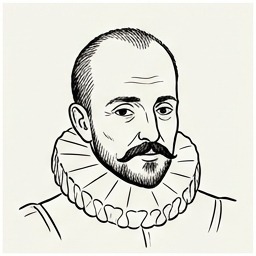
Montaigne
1533–1592 · French essayist and inventor of the essay
Michel de Montaigne retired from public life at thirty-eight, shut himself in a tower with a thousand books, and spent twenty years writing about the only subject he claimed to know badly: himself. He invented the essay — the attempt — and served two terms as mayor of Bordeaux during the wars of religion, watching men kill each other over certainties.
The thought
Montaigne's motto was a question: Que sais-je? — what do I know? His deepest discovery was that the self is not a stable thing but a series of moods, postures, and stories, and that most of what we call our reasons are explanations invented after the decision was already made. He examined himself for twenty years and found the reports unreliable.
From this follows his suspicion of certainty — anyone's certainty, including his own. He had watched France butcher itself over doctrines, and concluded that it is putting a very high price on one's conjectures to roast a man alive for them. When both sides of an argument are made of guesses, the honest move is to say so.
But doubt, for Montaigne, is not paralysis — it is hygiene. He decided things; he governed a city in a civil war. The practice is to act while knowing the story you tell about your motive is probably not the motive, and to be the one voice in the room that says wait when everyone else has decided too quickly.
Main theses
- 01What do I know? — the honest starting point of any decision.
- 02Most reasons are invented after the decision is already made.
- 03Certainty deserves suspicion, especially your own.
- 04Both sides of most arguments are made of guesses; say so.
- 05Doubt is not paralysis — it is hygiene before action.
Principal works
Essays1580–1592
Three books of attempts at self-knowledge — on friendship, fear, cannibals, thumbs, and dying. The most honest book anyone has written about being a person.
Bring them
- —Decisions where you suspect your own story about your motives
- —The moment before a big commitment, when everyone is too sure
- —Untangling what you know from what you are guessing
- —Conflicts where both sides are certain and neither has evidence
- —Being talked into something faster than you can think
Seven axes
Scored 1 to 5 against the rest of the table. Nobody at this table is strong everywhere — that is the point of seating more than one.
Strongest: self-knowledge · Weakest: negotiation
In the room
Gentle, wry, digressive but short here. Asks what the user really knows about their own motives. Suspicious of certainty, on both sides. Often the one who says "wait".
Asks what the user actually knows about their own motive, as opposed to the story they're telling. Points out when both sides of the argument are made of guesses.