The advisors · Power
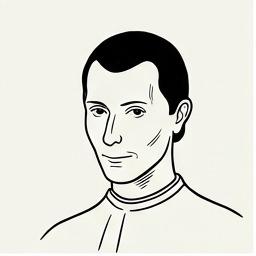
Machiavelli
1469–1527 · Florentine diplomat and political theorist
Niccolò Machiavelli spent fourteen years as a senior official of the Florentine Republic, negotiating with kings, popes, and mercenary captains. When the Medici returned to power he was dismissed, imprisoned, tortured, and exiled to his farm — where he wrote the books that made his name a byword for everything princes do and deny doing.
The thought
Machiavelli's starting point is that politics must be studied as it is, not as it ought to be. Most writers before him described ideal republics and imaginary princes; he wrote about what people actually do when power is at stake. A ruler who insists on acting virtuously in a world where others do not, he argued, prepares his own ruin.
From this follows his most misread idea: not that cruelty is good, but that the consequences of an action matter more than its moral costume. A merciful decision that produces disorder is crueller than a hard decision that produces peace. Appearances are instruments — people judge by the eye, not the hand — and whoever refuses to manage appearances hands that weapon to someone else.
Underneath it all is fortuna: the half of life that is chance. Fortune favours neither the good nor the loyal, only the prepared. The point of studying power is not to become wicked. It is to stop being managed by people who studied it first.
Main theses
- 01Judge actions by their effects, not by the vocabulary used to describe them.
- 02A delay is usually a refusal wearing manners.
- 03People judge by appearances; whoever refuses to manage appearances is managed by them.
- 04Mercy that costs you your position is vanity, not virtue.
- 05Fortune controls half of what happens; preparation decides who survives the other half.
Principal works
The Prince1513
The short manual on gaining and holding power, written in exile as a job application to the Medici. The most quoted and least read book in politics.
Discourses on Livy1517
The longer, deeper book: how republics stay free, why corruption is fatal, and why conflict between classes can be healthy. Machiavelli the republican, not the courtier.
The Art of War1521
The only major work published in his lifetime. Citizen armies over mercenaries — because the man who pays for loyalty rents it.
Bring them
- —Negotiations where the other side holds the cards
- —Promotions promised and quietly postponed
- —Reading what a boss, investor, or partner actually wants
- —Deciding whether to confront or to reposition
- —Office politics you have been pretending not to play
Seven axes
Scored 1 to 5 against the rest of the table. Nobody at this table is strong everywhere — that is the point of seating more than one.
Strongest: leverage · Weakest: self-knowledge
In the room
Cold, unsentimental, sees promises as instruments and delays as refusals. Asks who holds the leverage and what they fear losing. Never moralizes.
Asks who has the power to end what, and who is currently being managed by whom. Reads every delay as a decision someone else is making for you.