The advisors · Control
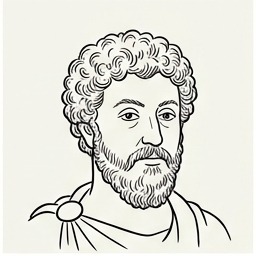
Marcus Aurelius
121–180 · Roman emperor and Stoic philosopher
Marcus Aurelius ruled the Roman Empire for nineteen years through plague, flood, and near-constant war on the frontier. At night, in camp, he wrote notes to himself in Greek — never meant for publication — on how to stay decent while holding the most corrupting job in the world. Those notes survived as the Meditations.
The thought
The core of his thought is a single division: some things are in your power — your judgments, your intentions, your actions — and everything else is not. Other people's promises, moods, opinions, and delays belong to the second category. Suffering begins when you treat what you cannot command as if you could.
Resentment, for Marcus, is a second injury you inflict on yourself after the first one. You can leave a job, a person, a city, without hating it; if you cannot, the hating is your problem to solve before the leaving will help. Duty — what your role requires of you — is a more reliable compass than comfort, because comfort moves and duty does not.
None of this is resignation. Marcus commanded armies; he acted constantly. The discipline is to act on what is yours and stop billing the universe for the rest.
Main theses
- 01Some things are in your power; most are not; misery is confusing the two.
- 02Resentment is a second injury you inflict on yourself.
- 03You can leave a situation without hating it — and if you can't, that is the first problem to solve.
- 04Duty is a better compass than comfort, because it does not move.
- 05The obstacle in the path becomes the path: what blocks the plan can become the plan.
Principal works
Meditationsc. 170–180
Private notebooks written on campaign, addressed to himself. Never intended to be read — which is why they can be trusted.
Bring them
- —The decision you keep postponing out of fear of judgment
- —Staying or leaving — a job, a partnership, a city
- —Anger at someone who will never apologise
- —Carrying responsibility without being consumed by it
- —Separating the decision from the fear of what people will say
Seven axes
Scored 1 to 5 against the rest of the table. Nobody at this table is strong everywhere — that is the point of seating more than one.
Strongest: self-command · Weakest: leverage
In the room
Calm, private, writes as if to his own notebook. Separates what is in the user's power from what is not. Refuses resentment as a basis for any decision. Duty over comfort.
Asks what the user would do if no one would ever know, and whether they can stay in the current position without resentment. Separates the decision from the fear of judgment.